
Quick Answer
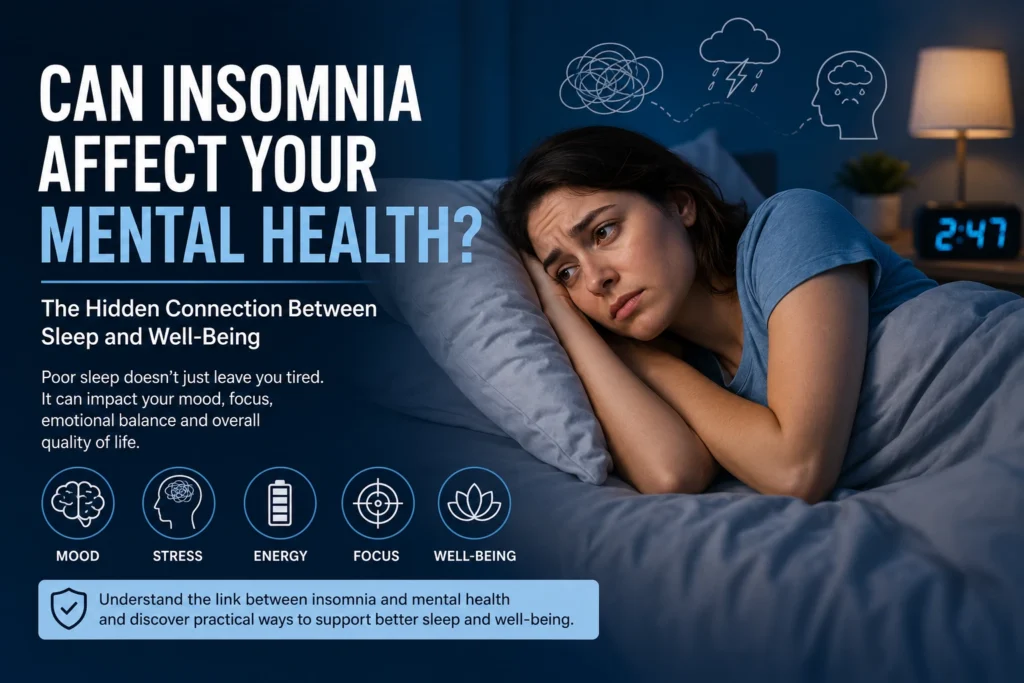
Yes, insomnia and mental well-being are closely connected. Poor sleep may affect mood, concentration, emotional resilience and overall quality of life, while stress, anxiety and other emotional challenges can also make it more difficult to sleep. For many people, this creates a cycle where sleep and emotional well-being influence each other. Understanding this relationship is an important step toward supporting healthier sleep and overall well-being.
In This Guide
In this article, you’ll learn:
- How insomnia may influence mental well-being
- Why stress and sleep often affect each other
- Early warning signs people commonly overlook
- How sleep supports emotional and cognitive health
- Practical habits that may support healthier sleep
- When it’s appropriate to seek professional advice
Sleep Is More Than Just Rest
Most people think of sleep as a way to recharge after a busy day.
However, while you’re asleep, your brain remains active. Throughout the night, it supports processes involved in memory, learning, emotional regulation and many other functions that help you manage the following day.
That’s one reason why even a few nights of poor sleep can leave you feeling more irritable, distracted or emotionally overwhelmed than usual.
For someone experiencing insomnia, these effects may become increasingly noticeable over time.
Difficulty falling asleep, waking repeatedly during the night or waking much earlier than planned doesn’t simply cause tiredness. It may also influence how you think, react to challenges and manage everyday emotions.
This is why healthy sleep is an important part of overall well-being rather than simply something that determines how energetic you feel in the morning.
Why Are Sleep and Mental Health So Closely Connected?
Imagine trying to use your smartphone after forgetting to charge it overnight.
The device may still turn on, but everything feels slower.
Apps freeze.
Simple tasks become frustrating.
Your brain can experience something similar after repeated nights of insufficient or disrupted sleep.
Although it continues to function, some of the processes involved in attention, decision-making, memory and emotional regulation may not work as efficiently as they normally would.
Research into sleep has shown that sleep and emotional well-being are closely connected. Rather than being completely separate issues, sleep difficulties and emotional distress can influence one another.
Poor sleep may make everyday stress more difficult to manage.
At the same time, ongoing stress or anxiety may make it harder to fall asleep.
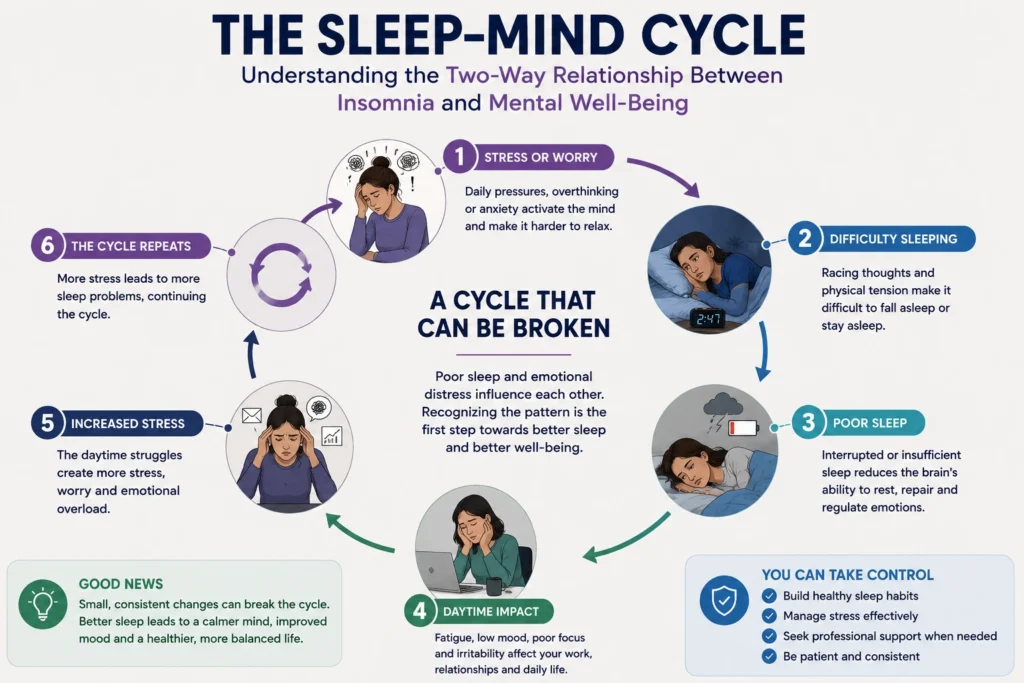
This creates what is often described as a two-way relationship between sleep and mental well-being.
The Sleep–Mind Cycle
One difficult night rarely causes long-term problems.
The challenge often begins when poor sleep becomes a regular pattern.
For example, imagine someone who has an important presentation on Monday morning.
On Sunday evening, they worry about making mistakes.
Because they feel anxious, they struggle to fall asleep.
The next morning, they feel exhausted and find it harder to concentrate. This makes them more concerned about their performance and about getting enough sleep the following night.
By Tuesday evening, they may already be thinking:
“What if I can’t sleep again?”
Ironically, worrying about sleep can create additional mental tension, making it even harder to relax at bedtime.
This cycle is surprisingly common.
Some people eventually find that worrying about whether they will sleep becomes almost as disruptive as the original sleep problem.
Sleep–Mind Cycle
Stress or anxiety → difficulty sleeping → poor sleep → fatigue and irritability → increased stress → difficulty sleeping
Recognising this pattern can be an important first step toward addressing the factors that may be keeping the cycle going.
Common Emotional Changes Associated With Poor Sleep
Everyone responds differently to sleep loss.
Some people notice only mild tiredness, while others experience more noticeable changes in their mood and ability to cope with everyday situations.
Common experiences may include:
- Feeling unusually irritable
- Becoming impatient over small problems
- Finding it harder to focus during conversations
- Reduced motivation
- Increased emotional sensitivity
- Difficulty concentrating at work or school
- Feeling mentally exhausted despite limited physical activity
- Finding everyday decisions more difficult
Experiencing one or more of these symptoms does not automatically mean that someone has a mental health condition.
These changes can have many possible causes. However, when they occur alongside persistent insomnia, sleep may be one factor worth discussing with a healthcare professional.
What Happens Inside the Brain During Sleep?
Sleep is not simply a period when the body shuts down.
During healthy sleep, the brain supports several processes associated with learning, memory, emotional processing and normal daily functioning.
Sleep contributes to:
- Organising newly learned information
- Supporting memory consolidation
- Processing emotional experiences
- Maintaining normal communication between brain cells
- Supporting physical and mental recovery
When sleep is repeatedly interrupted or insufficient, these processes may become less effective.
This helps explain why people experiencing ongoing insomnia sometimes describe feeling mentally “foggy”, forgetful or emotionally drained.
Did You Know?
Sleep quality is not determined only by the number of hours spent in bed.
Someone who spends eight hours in bed but wakes repeatedly throughout the night may still feel less refreshed than someone who experiences more consistent, uninterrupted sleep.
Can Stress Cause Insomnia—or Does Insomnia Cause Stress?
There isn’t always a simple answer.
For many people, stress contributes to insomnia.
Then insomnia may increase stress.
The two can continue reinforcing each other.
A demanding period at work, relationship difficulties, financial concerns, major life changes or worries about health can all make it harder for the mind to relax at bedtime.
At the same time, repeated poor sleep may reduce your ability to cope with those challenges the following day.
This is why improving sleep sometimes involves more than simply changing your bedtime.
Managing daily stress, establishing healthier routines and identifying possible underlying contributors can all form part of a broader approach to sleep management.
When Lack of Sleep Starts Affecting Daily Life
Poor sleep doesn’t necessarily stay in the bedroom.
Its effects can follow you throughout the day.
You might notice:
- Making simple mistakes at work
- Forgetting appointments or everyday tasks
- Finding it difficult to stay engaged during meetings
- Feeling less patient with family members
- Losing interest in hobbies you normally enjoy
- Struggling to make everyday decisions
- Feeling less productive than usual
Over time, these changes may begin affecting confidence, productivity and relationships.
Recognising these signs can make it easier to address persistent sleep problems before they become even more disruptive.
Key Takeaways
✔ Sleep and mental well-being influence one another.
✔ Insomnia may affect mood, concentration and emotional resilience.
✔ Stress can contribute to poor sleep, while poor sleep may increase stress.
✔ Healthy sleep supports important brain functions beyond simply reducing tiredness.
✔ Persistent insomnia deserves attention rather than being dismissed as “just a few bad nights.”
Myth vs Reality About Insomnia
Misunderstandings about insomnia can sometimes cause people to underestimate the effect that ongoing sleep problems may have on everyday life.
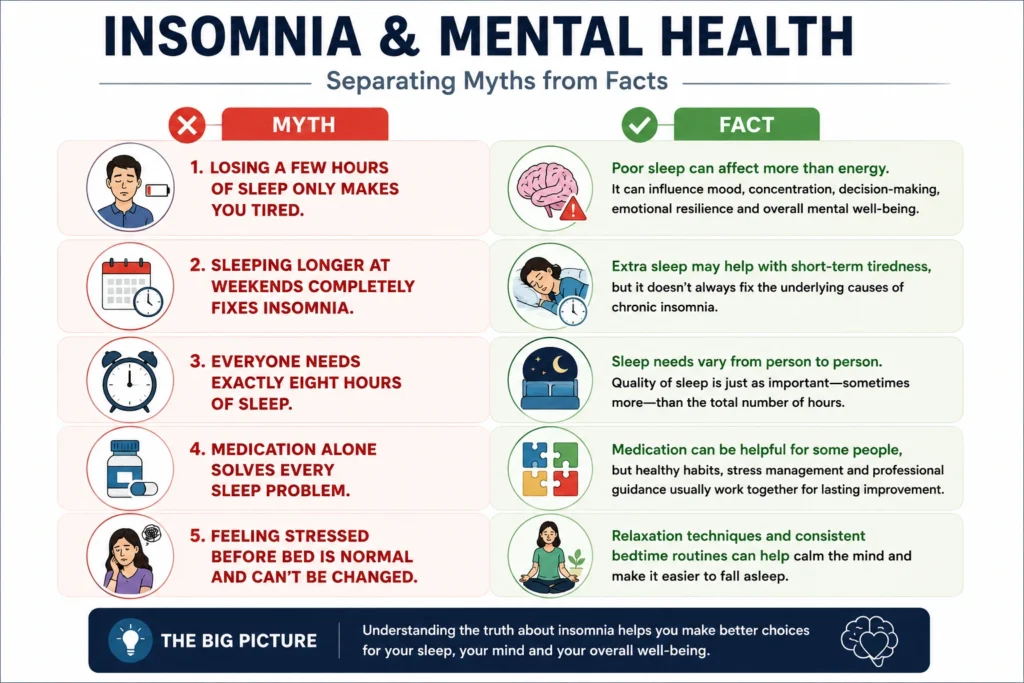
| Myth | Reality |
|---|---|
| Losing a few hours of sleep only makes you tired. | Poor sleep may also influence mood, concentration and emotional resilience. |
| Sleeping longer at weekends completely fixes insomnia. | Extra sleep may help with tiredness, but it does not necessarily address the underlying cause of persistent insomnia. |
| Everyone needs exactly eight hours of sleep. | Sleep needs vary between individuals, and sleep quality is also important. |
| Medication alone solves every sleep problem. | Depending on the cause, treatment may involve behavioural approaches, lifestyle changes, professional guidance and medication when appropriate. |
| Feeling stressed before bed is normal and cannot be changed. | Relaxation techniques and consistent bedtime routines may help some people prepare for sleep. |
Everyday Habits That Support Both Sleep and Mental Well-Being
Healthy sleep usually doesn’t depend on a single habit.
Instead, several small changes can work together to create a more supportive sleep routine.
Build a Consistent Routine
Going to bed and waking up at similar times each day can help support your body’s natural sleep-wake rhythm.
Try to keep your schedule reasonably consistent, including on weekends.
Create a Relaxing Evening Routine
Many people benefit from spending the final part of the evening doing calming activities.
Reading, gentle stretching, quiet music or another relaxing activity may help you transition away from the demands of the day.
Reduce Evening Screen Time
Phones, tablets and laptops can make it harder for some people to unwind before bedtime.
Consider reducing stimulating screen use during the period before sleep and keeping your bedroom environment focused on rest.
Stay Physically Active
Regular physical activity supports overall health and may contribute to better sleep quality.
A daily walk or another form of suitable exercise can be a simple way to remain active.
Manage Daily Stress
Stress affects everyone differently.
Some people find techniques such as mindfulness, breathing exercises, journaling or talking with trusted friends and family helpful for reducing mental tension.
The goal isn’t to eliminate every source of stress, but to develop healthier ways of managing it.
Expert Insight
Improving sleep is rarely about discovering one perfect solution.
Long-term sleep management may involve a combination of healthy routines, identifying contributing factors, addressing stress and seeking professional guidance when appropriate.
Instead of asking:
“How can I sleep tonight?”
it can sometimes be more useful to ask:
“What changes can help improve my sleep consistently over the coming weeks?”
This shift in thinking encourages long-term improvement rather than focusing only on a single difficult night.
Quick Self-Check
Take a moment to consider your current sleep habits:
- Do I go to bed at roughly the same time each night?
- Do I often lie awake thinking about tomorrow?
- Do I rely on my phone until I try to sleep?
- Has poor sleep affected my work, studies or relationships?
- Have these problems continued for several weeks?
If you answered “yes” to several of these questions, it may be worth reviewing your sleep habits and discussing persistent concerns with a healthcare professional.
This self-check is not a diagnostic test. Its purpose is simply to help you recognise patterns that may deserve attention.
When Should You Seek Professional Advice?
Occasional sleepless nights are something most people experience from time to time.
A stressful week at work, travelling across time zones, changes in routine or temporary lifestyle disruptions can all affect sleep.
However, if sleep difficulties continue for several weeks or begin interfering with your daily life, it may be appropriate to seek professional advice.
Consider speaking with a healthcare professional if you:
- Regularly struggle to fall asleep or stay asleep
- Wake feeling unrefreshed despite spending enough time in bed
- Notice that poor sleep is affecting work, studies or relationships
- Experience excessive daytime sleepiness that interferes with daily activities
- Have concerns about ongoing insomnia or prescription sleep medication
A professional assessment can help identify possible contributing factors and determine what type of support may be appropriate.
Looking at the Bigger Picture
Insomnia is rarely caused by one factor alone.
For some people, sleep difficulties begin during a stressful period of life.
For others, they may be associated with irregular work schedules, unhelpful sleep habits, chronic pain, medications or other underlying health factors.
Because of this, effective sleep management often focuses on the whole person, rather than simply treating the symptom of being unable to sleep.
Understanding what may be contributing to poor sleep can help guide more appropriate solutions.
Supporting Better Sleep Every Day
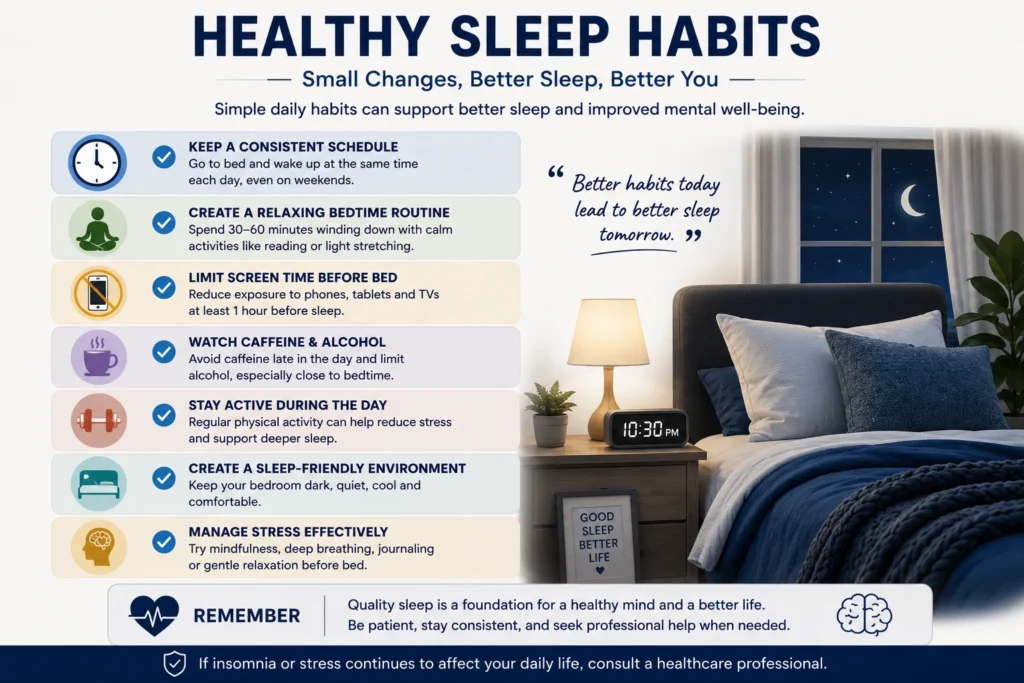
Healthy sleep isn’t built in a single night.
Instead, it develops through daily habits that support both physical and emotional well-being.
Many people find it helpful to:
- Maintain a consistent bedtime and wake-up time
- Limit caffeine later in the day
- Keep the bedroom quiet, dark and comfortable
- Reduce stimulating screen use before bedtime
- Stay physically active during the day
- Practice relaxation techniques that help the mind unwind
- Give yourself enough time to wind down before bed
These habits may seem simple, but together they can create a stronger foundation for healthier sleep.
Related Sleep Resources
If you’d like to learn more about sleep and insomnia, you may also find these guides helpful:
- Understanding Insomnia: Causes, Symptoms and Treatment Options
- Why Can’t I Sleep? 12 Common Causes of Insomnia
- Sleep Hygiene Explained: 10 Science-Backed Habits for Better Sleep
- How Long Does Zopiclone Stay in Your System?
- Can You Build a Tolerance to Zopiclone?
- Zopiclone vs Eszopiclone: What’s the Difference?
Sleep Treatment and Professional Guidance
If persistent insomnia is affecting your daily life, treatment options can vary depending on the underlying cause.
A healthcare professional can help determine whether behavioural approaches, lifestyle changes, stress management or prescription treatment may be appropriate for your individual circumstances.
Prescription sleep medicines should only be used according to appropriate professional advice and the instructions provided for the specific medicine.
Final Thoughts
Sleep affects far more than how rested you feel in the morning.
It can influence mood, concentration, emotional resilience, productivity and overall quality of life.
When insomnia becomes persistent, its effects may gradually extend into many areas of everyday living. Understanding the connection between insomnia and mental health is therefore an important part of recognising when sleep problems deserve attention.
Whether your sleep difficulties are temporary or ongoing, focusing on healthy sleep habits, recognising possible contributing factors and seeking professional advice when appropriate can help support better long-term sleep health.
Better sleep is rarely about finding a single solution overnight. It is usually the result of consistent habits, informed decisions and an approach that considers the individual and the factors affecting their sleep.
Frequently Asked Questions
Can insomnia affect your mental health?
Yes. Ongoing insomnia may affect mood, concentration, emotional resilience and overall well-being. At the same time, stress and emotional challenges can also contribute to sleep difficulties, creating a two-way relationship between sleep and mental well-being.
Can anxiety make insomnia worse?
Yes. Stress and anxiety can make it more difficult to relax at bedtime or stay asleep. Worrying about sleep itself may also contribute to a cycle of increased mental tension and further sleep difficulty.
How can I improve my sleep naturally?
Helpful strategies may include maintaining a regular sleep schedule, reducing stimulating screen use before bedtime, limiting caffeine later in the day, staying physically active and creating a comfortable, relaxing sleep environment.
When should I see a healthcare professional?
If insomnia continues for several weeks, affects your daily functioning or causes ongoing concern, it is advisable to speak with a qualified healthcare professional. They can help assess possible causes and discuss appropriate treatment options.
Is medication the only treatment for insomnia?
Not always. Depending on the underlying cause, insomnia management may involve sleep habits, lifestyle changes, stress management, behavioural approaches and, when appropriate, prescription medication under professional guidance.
Medical Disclaimer
This article is provided for educational and informational purposes only. It is not intended to replace professional medical advice, diagnosis or treatment. Never ignore or delay seeking medical advice because of something you have read online. Always consult a qualified healthcare professional regarding questions about your health, sleep difficulties or prescription medications.