
Quick Answer
Yes. Insomnia and mental well-being are closely connected. Poor sleep may affect mood, concentration, emotional resilience and overall quality of life, while stress, anxiety and other mental health challenges can also make it more difficult to sleep. For many people, this creates a cycle where sleep and emotional well-being influence each other. Understanding this relationship is an important step toward improving both sleep quality and daily functioning.
In This Guide
In this article, you’ll learn:
- How insomnia may influence mental well-being
- Why stress and sleep often affect each other
- Early warning signs people commonly overlook
- The science behind sleep and emotional health
- Practical habits that may support healthier sleep
- When it’s appropriate to seek professional advice
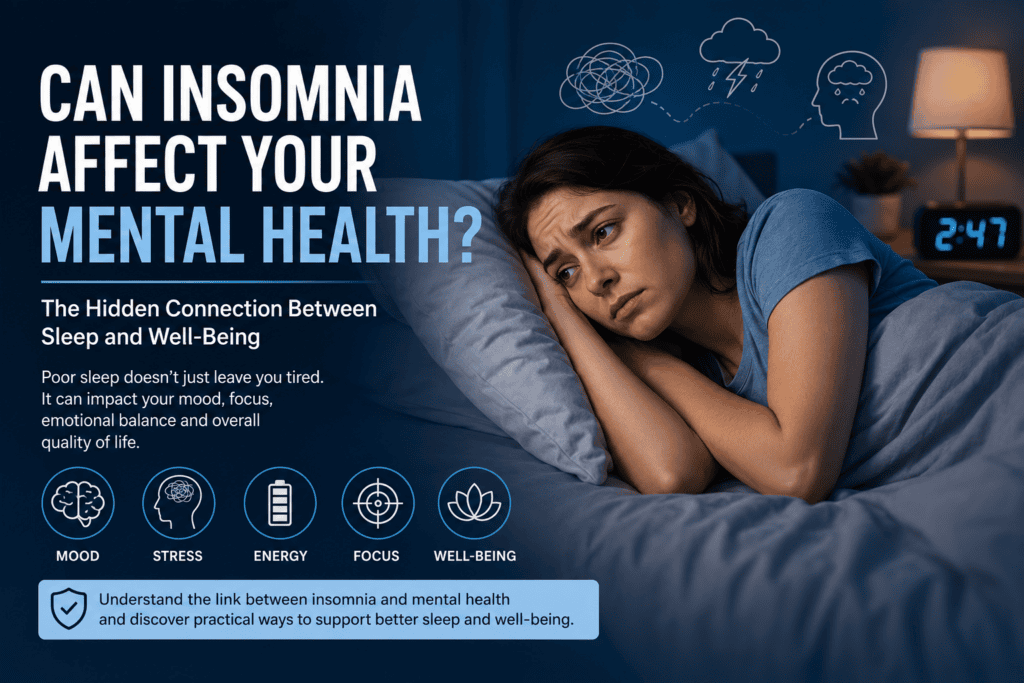
Sleep Is More Than Just Rest
Most people think of sleep as a way to recharge after a busy day.
However, while you’re asleep, your brain is far from inactive. Throughout the night, it continues to process memories, regulate hormones, organise information and support many of the biological systems that help you function the following day.
That’s one reason why even a few nights of poor sleep can leave you feeling more irritable, distracted or emotionally overwhelmed than usual.
For someone living with insomnia, these effects may become increasingly noticeable over time.
Difficulty falling asleep, waking repeatedly during the night or rising much earlier than planned doesn’t simply cause tiredness. It may also influence how you think, react to challenges and manage everyday emotions.
This is why sleep specialists increasingly describe healthy sleep as one of the foundations of overall well-being—not simply a luxury or something that’s nice to have.
Why Are Sleep and Mental Health So Closely Connected?
Imagine trying to use your smartphone after forgetting to charge it overnight.
The device may still turn on, but everything feels slower.
Apps freeze.
The battery drains quickly.
Simple tasks become frustrating.
Your brain can experience something similar after repeated nights of insufficient sleep.
Although it continues to function, many of the systems responsible for attention, decision-making, emotional regulation and memory may not operate as efficiently as they normally would.
Researchers have spent decades studying this relationship.
Rather than seeing insomnia and mental health as completely separate issues, experts now understand that they often influence one another.
Poor sleep may increase emotional distress.
At the same time, emotional distress may make it harder to fall asleep.
This creates what many sleep specialists describe as a two-way relationship.
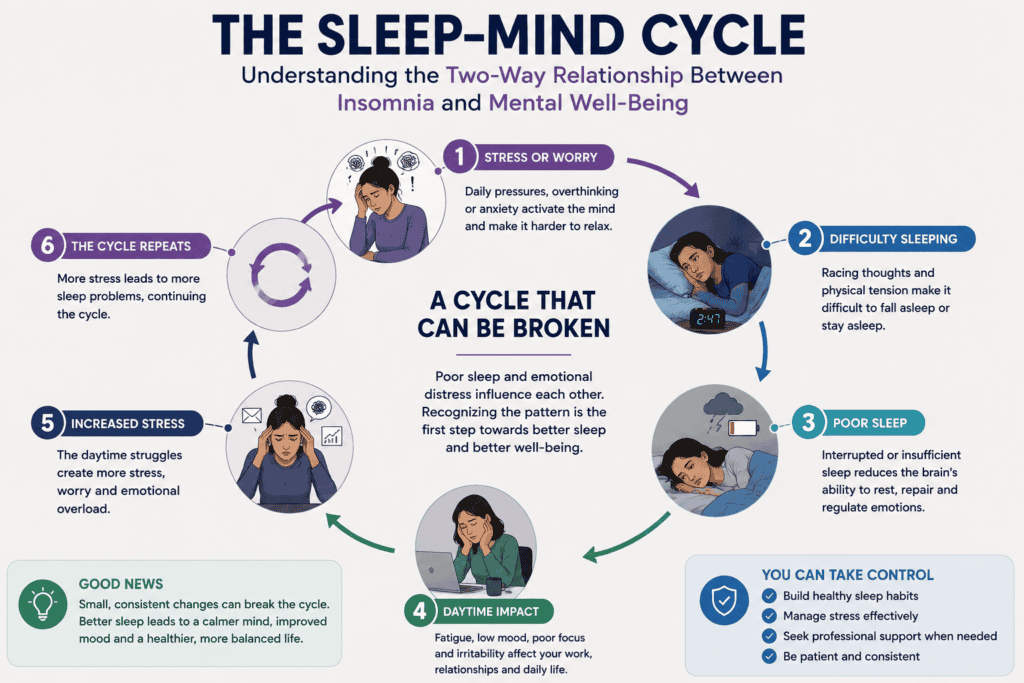
The Sleep–Mind Cycle
One difficult night rarely causes long-term problems.
The challenge often begins when poor sleep becomes a regular pattern.
For example:
Sarah has an important presentation on Monday morning.
On Sunday evening, she worries about making mistakes.
Because she’s anxious, she struggles to fall asleep.
The next morning she feels exhausted, finds it harder to concentrate and becomes even more concerned about the following night.
By Tuesday evening she’s thinking:
“What if I can’t sleep again?”
Ironically, that thought itself creates additional stress, making sleep even more difficult.
This cycle is surprisingly common.
Many people eventually discover that worrying about sleep becomes almost as disruptive as the original sleep problem.
Common Emotional Changes Associated With Poor Sleep
Everyone responds differently to sleep loss.
Some people notice only mild tiredness.
Others experience much more significant emotional changes.
Common experiences include:
- Feeling unusually irritable.
- Becoming impatient over small problems.
- Finding it harder to focus during conversations.
- Reduced motivation.
- Increased emotional sensitivity.
- Difficulty concentrating at work or school.
- Feeling mentally exhausted despite doing very little physical activity.
Experiencing one or more of these symptoms does not automatically mean someone has a mental health condition.
However, persistent changes that continue alongside ongoing insomnia deserve attention rather than being ignored.
What Happens Inside the Brain During Sleep?
Sleep is often divided into several stages, each supporting different aspects of physical and mental recovery.
During healthy sleep, the brain helps:
- Organise newly learned information.
- Strengthen memory.
- Process emotional experiences.
- Remove certain waste products produced during daily activity.
- Support healthy communication between brain cells.
When sleep is repeatedly interrupted, these natural processes may become less efficient.
This helps explain why people experiencing chronic insomnia often describe feeling mentally “foggy” or emotionally drained.
Did You Know?
Sleep specialists often recommend looking at overall sleep quality, not just the total number of hours slept.
Someone who spends eight hours in bed but wakes frequently throughout the night may still feel less refreshed than someone who enjoys consistent, uninterrupted sleep.
Can Stress Cause Insomnia—or Does Insomnia Cause Stress?
One of the most interesting discoveries in sleep research is that there isn’t always a simple answer.
For many people:
Stress contributes to insomnia.
Insomnia then increases stress.
The two continue reinforcing each other.
This is why improving sleep sometimes involves more than simply focusing on bedtime.
Managing daily stress, improving routines and identifying underlying contributors may all become part of a broader sleep management plan.
When Lack of Sleep Starts Affecting Daily Life
Poor sleep doesn’t only stay in the bedroom.
Its effects often follow people throughout the day.
You might notice:
- Making simple mistakes at work.
- Forgetting appointments.
- Finding it difficult to stay engaged during meetings.
- Feeling less patient with family members.
- Losing interest in hobbies you normally enjoy.
- Struggling to make everyday decisions.
Over time, these changes may begin affecting confidence, productivity and relationships.
Recognising these early signs can make it easier to seek support before sleep problems become even more disruptive.
Key Takeaways So Far
✔ Sleep and mental well-being influence one another.
✔ Insomnia may affect mood, concentration and emotional resilience.
✔ Stress can contribute to poor sleep, while poor sleep may increase stress.
✔ Healthy sleep supports many important brain functions beyond simply reducing tiredness.
✔ Persistent insomnia deserves attention rather than being dismissed as “just a few bad nights.”
Why Sleep Affects More Than Just Your Energy Levels
Many people assume that the biggest consequence of insomnia is simply feeling tired the next day.
In reality, sleep plays a much broader role in maintaining emotional balance, cognitive performance and overall well-being.
When you consistently get restorative sleep, your brain has time to organise memories, regulate emotional responses and prepare for the challenges of the next day.
When sleep becomes fragmented or insufficient, these processes may not work as efficiently.
As a result, people often notice changes that extend far beyond physical fatigue.
They may feel:
- Less patient in everyday situations.
- More sensitive to criticism.
- Easily distracted at work.
- Mentally exhausted after simple tasks.
- Less motivated to socialise or exercise.
Although these experiences are common among people with poor sleep, they don’t automatically indicate a mental health condition. They simply highlight how closely sleep and emotional well-being are connected.
The Two-Way Relationship Between Sleep and Emotional Well-Being
One of the most important concepts in sleep medicine is that the relationship works in both directions.
Poor sleep may make it harder to cope with everyday stress.
At the same time, ongoing stress, anxiety or emotional pressure can make it more difficult to fall asleep.
This creates a repeating cycle.
A Simple Example
Imagine someone who has several stressful deadlines at work.
They spend the evening worrying about unfinished tasks.
Because their mind remains active, they struggle to fall asleep.
The next morning they wake feeling exhausted.
Reduced sleep makes concentrating at work more difficult, increasing stress even further.
By bedtime, they’re worrying about another poor night’s sleep.
Without recognising the pattern, many people become trapped in this cycle.
Breaking that cycle often involves improving both sleep habits and the factors contributing to stress.
Signs That Poor Sleep May Be Affecting Your Daily Well-Being
Not everyone experiences insomnia in the same way.
However, certain changes are commonly reported when poor sleep continues over time.
You may notice:
✔ Difficulty concentrating during conversations.
✔ Forgetting small everyday tasks.
✔ Feeling emotionally overwhelmed more easily.
✔ Reduced productivity at work or university.
✔ Less interest in hobbies or social activities.
✔ Increased frustration over minor problems.
✔ Feeling mentally “foggy” throughout the day.
These symptoms can have many possible causes, but persistent sleep problems are one factor worth considering.
Myth vs Reality
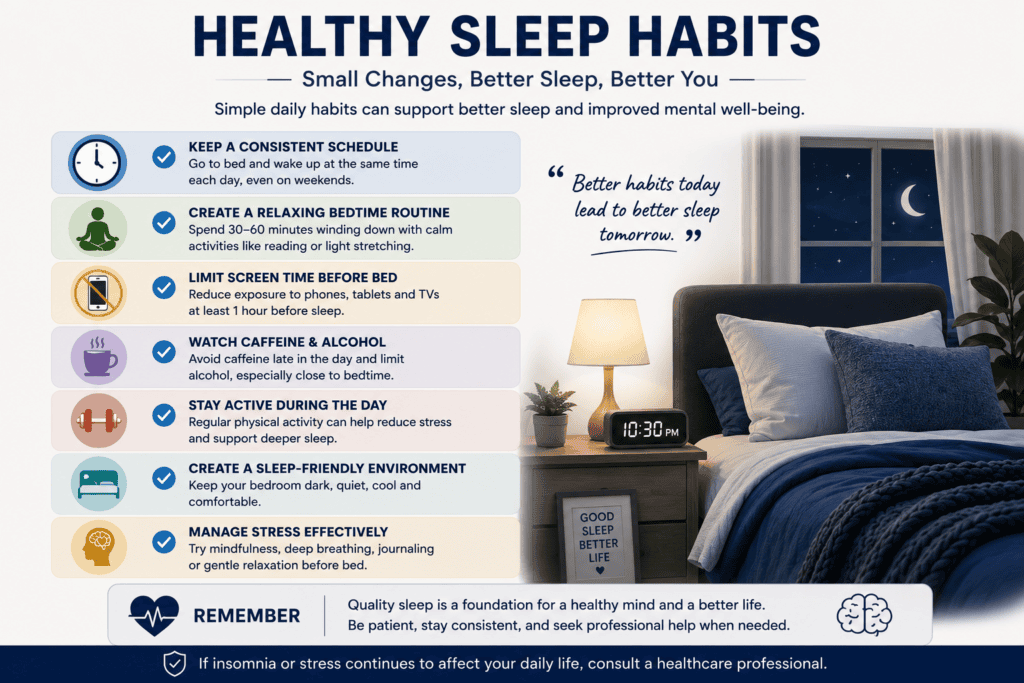
| Myth | Reality |
|---|---|
| Losing a few hours of sleep only makes you tired. | Poor sleep may also influence mood, focus and emotional resilience. |
| Sleeping longer at weekends completely fixes insomnia. | Extra sleep may help with tiredness, but it doesn’t always resolve the underlying cause of chronic insomnia. |
| Everyone needs exactly eight hours of sleep. | Sleep needs vary between individuals. Quality is often just as important as quantity. |
| Medication alone solves every sleep problem. | Healthy routines, stress management and appropriate medical care often work together. |
| Feeling stressed before bed is normal and can’t be changed. | Relaxation techniques and consistent bedtime routines may help some people prepare for sleep. |
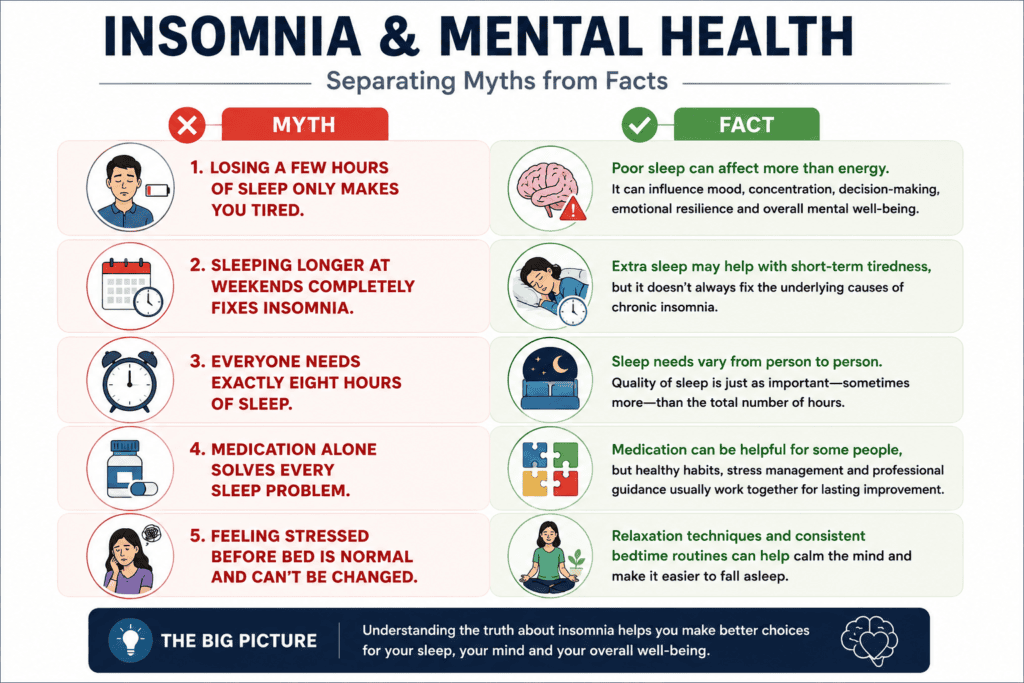
Everyday Habits That Support Both Sleep and Mental Well-Being
Healthy sleep doesn’t usually depend on a single habit.
Instead, several small improvements often work together.
Build a Consistent Routine
Going to bed and waking up at similar times each day helps support your body’s natural sleep–wake cycle.
Create a Relaxing Evening Routine
Many people benefit from spending the last 30–60 minutes before bed doing calming activities such as reading, gentle stretching or listening to relaxing music.
Reduce Evening Screen Time
Phones, tablets and laptops can make it more difficult for some people to unwind before bedtime.
Limiting screen use before sleep may help create a more relaxing environment.
Stay Physically Active
Regular physical activity supports overall health and may contribute to better sleep quality.
Even a daily walk can make a positive difference for many people.
Manage Daily Stress
Everyone experiences stress differently.
Simple techniques such as mindfulness, breathing exercises, journaling or talking with trusted friends and family may help reduce mental tension before bedtime.
Expert Insight
Sleep specialists often emphasise that improving sleep is rarely about finding one perfect solution.
Instead, successful long-term sleep management usually involves a combination of healthy routines, identifying contributing factors and seeking professional guidance when needed.
Rather than asking, “How can I sleep tonight?”, a more helpful question is often:
“What changes can help improve my sleep consistently over the coming weeks?”
This shift in thinking encourages long-term improvement rather than short-term fixes.
Quick Self-Check
Take a moment to ask yourself:
- Do I go to bed at roughly the same time each night?
- Do I often lie awake thinking about tomorrow?
- Do I rely on my phone until I try to sleep?
- Has poor sleep affected my work, studies or relationships?
- Have these problems continued for several weeks?
If you answered “yes” to several of these questions, it may be worth reviewing your sleep habits and discussing persistent concerns with a healthcare professional.
When Should You Seek Professional Advice?
Occasional sleepless nights are something most people experience from time to time. A stressful week at work, travelling across time zones or temporary lifestyle changes can all affect sleep.
However, if sleep difficulties continue for several weeks or begin interfering with your daily life, it may be time to seek professional advice.
Consider speaking with a healthcare professional if you:
- Regularly struggle to fall asleep or stay asleep.
- Wake up feeling unrefreshed despite spending enough time in bed.
- Notice that poor sleep is affecting your work, studies or relationships.
- Experience excessive daytime sleepiness that affects daily activities.
- Have concerns about prescription sleep medication or ongoing insomnia.
Early assessment can help identify potential contributing factors and guide an appropriate treatment plan.
Looking at the Bigger Picture
Insomnia is rarely caused by a single factor.
For some people, it begins during a stressful period of life.
For others, it develops alongside irregular work schedules, poor sleep habits, chronic pain or underlying health conditions.
Because of this, successful sleep management often focuses on the whole person, not simply the symptom of being unable to sleep.
Small improvements made consistently over time can often have a meaningful impact on sleep quality and overall well-being.
Supporting Better Sleep Every Day
Healthy sleep isn’t built in a single night.
Instead, it develops through daily habits that support both physical and emotional health.
Many people find it helpful to:
- Maintain a consistent bedtime and wake-up time.
- Limit caffeine later in the day.
- Keep the bedroom quiet, dark and comfortable.
- Reduce screen exposure before bedtime.
- Stay physically active during the day.
- Practice relaxation techniques that help the mind unwind.
These habits may seem simple, but together they create a stronger foundation for healthier sleep.
Related Sleep Resources
If you’d like to learn more about improving sleep and understanding insomnia, you may also find these guides helpful:
- Understanding Insomnia: Causes, Symptoms and Treatment Options
- Why Can’t I Sleep? 12 Common Causes of Insomnia
- Sleep Hygiene Explained: 10 Science-Backed Habits for Better Sleep
- How Long Does Zopiclone Stay in Your System?
- Can You Build a Tolerance to Zopiclone?
- Zopiclone vs Eszopiclone: What’s the Difference?
Sleep Support Options
- Zopiclone 7.5 mg Tablets
- Zopiclone 20 mg Tablets
- Eszopiclone 2 mg Tablets
- Eszopiclone 3 mg Tablets
- Browse Our Sleeping Pills Collection
Final Thoughts
Sleep affects far more than how rested you feel in the morning.
It influences your mood, concentration, emotional resilience, productivity and overall quality of life.
When insomnia becomes persistent, its effects can gradually extend into many areas of everyday living. Fortunately, understanding the connection between sleep and mental well-being is the first step toward making positive changes.
Whether your sleep difficulties are temporary or ongoing, focusing on healthy sleep habits, recognising potential contributing factors and seeking professional advice when appropriate can help support long-term sleep health.
Remember, better sleep is rarely about finding a single solution overnight. It’s usually the result of consistent habits, informed decisions and a personalised approach to care.
Frequently Asked Questions
Can insomnia affect your mental health?
Yes. Ongoing insomnia may affect mood, concentration, emotional resilience and overall well-being. At the same time, stress and emotional challenges can also contribute to sleep difficulties.
Can anxiety make insomnia worse?
Yes. Many people find that stress and anxiety make it more difficult to fall asleep or stay asleep, creating a cycle in which poor sleep and emotional distress reinforce one another.
How can I improve my sleep naturally?
Helpful strategies may include maintaining a regular sleep schedule, reducing evening screen time, limiting caffeine later in the day, staying physically active and creating a comfortable sleep environment.
When should I see a healthcare professional?
If insomnia continues for several weeks, affects your daily functioning or causes ongoing concern, it’s advisable to seek guidance from a qualified healthcare professional.
Is medication the only treatment for insomnia?
Not always. Depending on the cause, treatment may involve healthy sleep habits, lifestyle changes, stress management techniques, behavioural approaches or prescription medication when appropriate.
Medical Disclaimer
This article is provided for educational and informational purposes only. It is not intended to replace professional medical advice, diagnosis or treatment. Never ignore or delay seeking medical advice because of something you have read online. Always consult a qualified healthcare professional regarding any questions about your health or prescription medications.